Food-Safe Labels & FDA Compliance: Everything Product Brands Need to Know
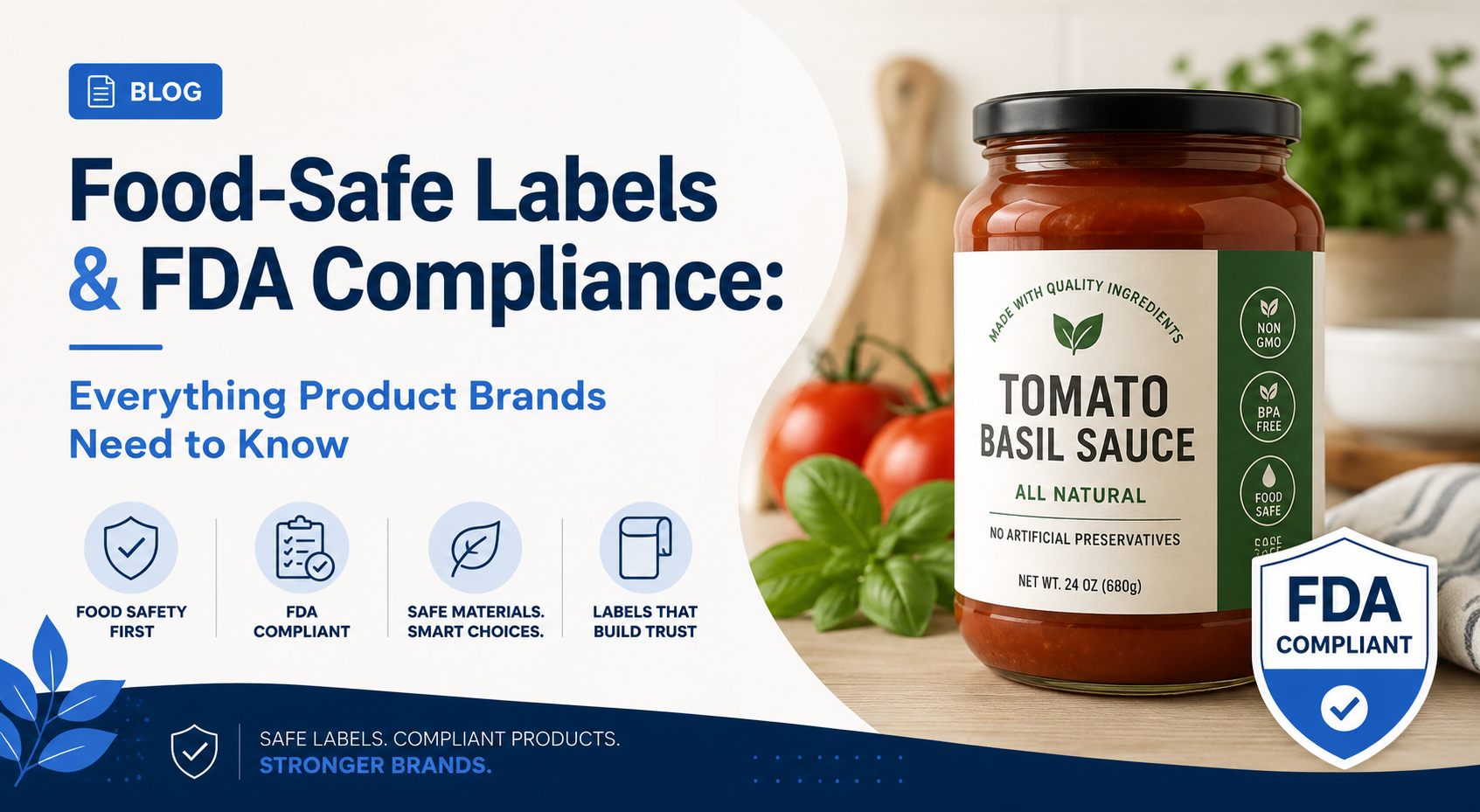
If you sell anything people eat, drink, apply to their skin, or inhale, your label is more than decoration — it's a legal requirement. Getting it wrong can cost you customers, trigger recalls, or put your business at risk. This guide covers everything you need to know about food-safe labels, FDA-compliant labels, and how to get them right the first time.
What Are Food-Safe Labels?
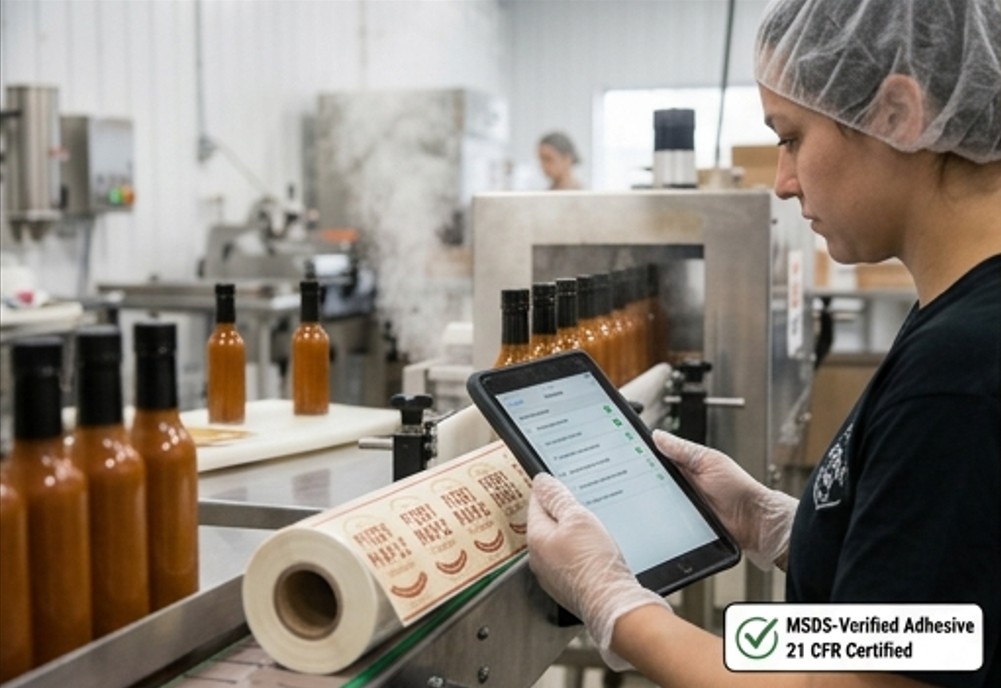 Food-safe labels are product labels made with materials, adhesives, and inks that are safe to use on or near food and consumable products. They won't contaminate what's inside the packaging and won't break down in environments where food is stored, refrigerated, or handled.
Think of a food-safe label like a protective shell. It has to look great on the outside, but everything used to make it — the adhesive, the ink, the film — has to be non-toxic and stable.
The term "food-safe" covers a few different things depending on how the label is used. A label on a glass jar of hot sauce sitting on a store shelf has different requirements than a label submerged in ice water on a bottled beverage. Both are food packaging labels, but their material specs will differ.
In short, food grade labels are labels that have been formulated and tested so that they don't pose a health risk to consumers—whether through direct food contact or indirect exposure during normal handling, storage, and use.
Why Food-Safe Labels Matter for Your Business
Let's be direct: if your labels aren't food-safe, you're taking a serious risk.
Imagine you've just launched a line of organic sauces. You found a cheap label printer, got a great price, and shipped your first batch to retailers. Then a store manager notices the labels are peeling off the product—or worse, a customer reports a reaction to the adhesive residue. That one oversight can unravel everything you've built.
Food safe adhesive labels aren't just about passing inspections. They protect your customers, your brand, and your bottom line.
Here's why it matters:
Consumer safety. Labels on food and beverage products can come into contact with the product itself. Non-food-grade adhesives or inks can leach chemicals into food, especially in warm or moist conditions. Using food-contact-safe labels removes this risk entirely.
Legal protection. In the United States, the FDA has specific guidelines around food packaging materials. Using non-compliant materials can result in regulatory action, product recalls, or fines.
Brand credibility. Customers are more label-conscious than ever. Clean, professional, food-safe product labels signal that your brand takes quality seriously — and that builds trust faster than any marketing campaign.
Retailer requirements. Many retailers, especially natural food stores and health-focused chains, require that products meet food label compliance standards before they'll carry your product.
Who Needs FDA-Compliant Labels?
The short answer: more businesses than you might think. FDA-compliant labels aren't just for big food manufacturers. If you sell any product that people consume, apply, or inhale — and that product is packaged with a label — you likely need to think about compliance.
Food & Beverage Brands
If you sell sauces, beverages, snacks, condiments, baked goods, or anything meant to be eaten or drunk, food-safe labels are non-negotiable. This includes home-based food businesses, cottage food producers, and small-batch artisan brands. Labels need to be able to withstand moisture, temperature changes, and direct handling. Whether you need sauce label printing for a local hot sauce business or beverage bottle labels for a craft drink brand, the materials have to meet food-safe standards. Explore our custom food labels to see what's available for your product type.
Health & Beauty Product Makers
Skincare, cosmetics, haircare, and personal care products all fall under FDA oversight. Cosmetic labels FDA compliant need to list ingredients accurately and use materials that won't degrade when exposed to oils, creams, or water. If your label melts off in the shower or peels in a humid bathroom, that's both a safety and branding problem. Browse our health & beauty labels to find the right solution for your products.
CBD & Hemp Companies
CBD is one of the most regulated labeling spaces in consumer products right now. CBD product labels FDA guidelines are still evolving, but the FDA is actively enforcing rules around health claims, ingredient transparency, and packaging standards. Your CBD packaging labels need to be accurate, durable, and printed on compliant materials. See our CBD packaging labels for options built around the specific needs of cannabis and hemp brands.
Vape & E-Juice Businesses
Vape label requirements are some of the most specific in the industry. E-juice labels FDA-compliant standards require nicotine warnings, child safety information, and specific formatting. The labels themselves must also hold up to the liquids and conditions they're stored in. If you sell vape or e-liquid products, make sure your vape product labels are printed to the right specs from the start.
What Makes a Label Truly Food-Safe?
Not every label that looks professional is actually food-safe. True food safety in labeling comes down to three things: the adhesive, the inks and coatings, and the base material. All three have to work together.
Food-Safe Adhesives
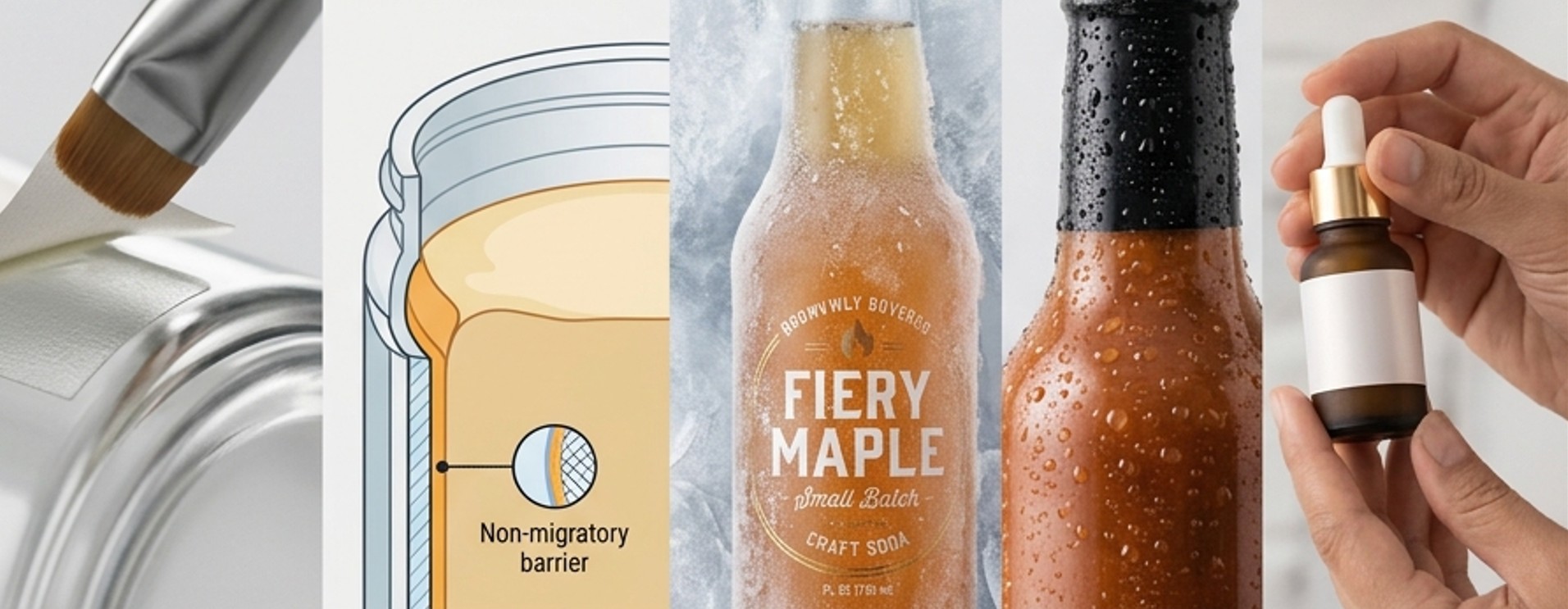
The adhesive is the part of the label that touches the container—and often comes closest to the product. A food-safe adhesive is one that doesn't contain harmful chemicals, doesn't break down into the product, and is stable across temperature ranges.
The FDA regulates adhesives used in food packaging under 21 CFR (Code of Federal Regulations). A GRAS-approved adhesive (Generally Recognized as Safe) or one that meets FDA indirect food materials standards is what you're looking for. Not all adhesives are created equal—a strong general-purpose adhesive designed for paper or shipping boxes isn't the same as a food-grade adhesive designed for product packaging.
Food-Safe Inks & Coatings
Food-safe ink printing uses inks that are either water-based, UV-cured, or otherwise formulated to be non-toxic and stable. The concern here is ink migration — the process by which ink chemicals can move through a packaging material and contaminate the product inside.
Compliant printers use inks that are tested to prevent migration, especially for labels applied near the opening of a container or directly on a surface that contacts food. Coatings like varnish or laminate should also be non-toxic and food-contact-material certified.
Food-Safe Label Materials (Substrates)
The face material — the part you see — also needs to be right. Non-toxic label materials are those made from films or papers that don't off-gas chemicals, don't absorb contaminants, and don't degrade in the presence of moisture or food oils. We'll cover the specific substrate options in detail in Section 7.
Understanding FDA Label Compliance
FDA label compliance sounds like a heavy legal topic, but for most product brands, it boils down to knowing three things: which regulations apply to you, whether your label touches food directly or indirectly, and what mistakes to avoid.
FDA Regulations That Apply to Product Labels
The FDA regulates food labeling under the Federal Food, Drug, and Cosmetic Act (FD&C Act), and the specific rules for packaging materials fall under Title 21 of the Code of Federal Regulations — or FDA CFR food packaging rules. These cover everything from the materials used in food contact surfaces to what information must appear on a label.
For food products, you'll be looking at 21 CFR Part 101 (food labeling) and 21 CFR Parts 170–189 (food additives, which includes adhesives and coatings). For cosmetics, 21 CFR Parts 700–740 apply. Understanding which part applies to your product type is the first step toward compliance.
Direct vs. Indirect Food Contact Labels
Not all food packaging labels carry the same level of risk. A direct food contact label is one that physically touches the food — think a label applied to the inside of a container lid, or a tag embedded in food packaging. These have the strictest material standards.
An indirect food contact label is one that's on the outside of a container that holds food. The label doesn't touch the food directly, but there's still risk from migration through the container walls or when consumers handle the package before opening it. Most product labels fall into this category.
Common Compliance Mistakes to Avoid
Skipping food label compliance altogether is the biggest mistake, but there are subtler ones too:
- Using standard craft adhesives instead of FDA-approved adhesive options
- Choosing inks without checking for migration compliance
- Not updating labels when formulations change
- Using a general-purpose printer who doesn't stock GMP-compliant labels
- Failing to include all required label elements for your product type
Types of Food-Safe Label Materials
Choosing the right material is one of the most important decisions you'll make when ordering food-safe product labels. Here's a breakdown of the most common options and when to use them.
Paper Labels
Paper is the classic label material. It's cost-effective, prints beautifully, and works well for dry products in controlled environments. However, standard paper labels aren't ideal for wet or refrigerated conditions — they'll wrinkle, smear, or peel when exposed to moisture. If you sell shelf-stable products with minimal exposure to water or condensation, paper is a solid choice for your custom food labels.
Polypropylene (BOPP) Labels
BOPP labels' food-safe options are one of the most popular materials for food and beverage products. Biaxially oriented polypropylene is a plastic film that's waterproof, tear-resistant, and extremely durable. Polypropylene food labels hold up well in the fridge, on wet bottles, and in high-humidity environments. They take color brilliantly and are available in clear, white, and metallic finishes. If you're doing beverage bottle labels or freezer products, BOPP is usually the go-to.
Polyester (PET) Labels
Polyester food labels are even more durable than BOPP and handle extreme temperatures exceptionally well. They're used for high-temperature food labels where other materials would fail — think baked goods packaging or products stored near heat sources. PET is also highly resistant to chemicals, making it a good fit for cleaning products and some cosmetic applications.
Clear & Transparent Labels
Clear, food-safe labels give your packaging a "no label look" — the label appears to float directly on the container. This no-label look food packaging style is especially popular in the beverage, beauty, and wellness industries, where minimalist design adds perceived value. Transparent food grade labels are typically made from BOPP or PET clear film and require high-quality printing to look their best.
Choosing the Right Adhesive for Your Product
The adhesive is the unsung hero of your label. Get it right and your labels stay on perfectly through every stage of the supply chain. Get it wrong and you'll end up with peeling, residue, or labels that fail when they matter most.
Permanent vs. Removable Adhesives
A permanent food-safe adhesive creates a strong, long-lasting bond that's not meant to come off without tearing. It's the right choice for most food and beverage products where the label should stay on for the life of the product.
Removable, food-safe labels use a lighter adhesive that allows the label to be cleanly peeled off without leaving residue. These are useful for reusable containers, promotional labels, or products where customers might want to remove the label after purchase.
Freezer-Grade Adhesives
Standard adhesives can fail in cold environments — they become brittle, lose tack, or peel off entirely when the temperature drops. Freezer safe labels use freezer grade adhesive labels specifically formulated to maintain their bond in sub-zero conditions. If you sell frozen foods, refrigerated beverages, or anything that spends significant time in a cold chain, this is what you need.
Waterproof & Moisture-Resistant Adhesives
Waterproof food labels need an adhesive that doesn't break down when wet. Water-resistant product labels are essential for beverages packed in ice, products used in wet kitchens, or anything exposed to condensation. The adhesive has to stay bonded even when soaked. Moisture-resistant labels also perform better in humid environments like walk-in coolers or outdoor markets.
High-Temperature Adhesives
Some products are filled hot, stored near heat, or used in cooking applications. In those cases, you need a high-temperature food label solution—an adhesive formulated to stay bonded even when exposed to heat during filling, sterilization, or everyday use. These are common in sauce label printing, canning, and commercial food production.
Best Label Finishes for Food & Consumer Products
The finish on your label affects both how it looks and how it holds up. Think of it as the protective coat on a painting — it seals everything in and determines the final visual impression.
Matte Finish
Matte is soft, sophisticated, and understated. It reduces glare and gives labels a premium feel that works especially well for organic product labels, natural food product labels, and artisanal brands. The trade-off is that matte finishes can show fingerprints and scuffs more easily than gloss, so they're better suited for products stored indoors or in controlled retail environments.
Gloss Finish
Gloss finishes are bright, vivid, and eye-catching. They make colors pop and give labels a sleek, professional look that works well for food and beverage labels, supplement labels FDA compliant packaging, and any product where shelf impact matters. Gloss is also more resistant to moisture and smudging than matte, making it a practical choice for many food products.
Clear/No-Label Look
As mentioned in the materials section, a clear or transparent finish creates the illusion that the label is part of the container itself. This style works best when your product is visually appealing on its own — a bright juice, a beautiful cream, or a premium CBD tincture. The no label look food packaging trend shows no sign of slowing down and continues to be one of the most requested options in custom label printing food packaging.
How to Tell If Your Current Labels Are FDA Compliant
If you're already printing labels and aren't sure whether they're compliant, here's how to find out quickly.
Questions to Ask Your Label Printer
Start by asking your current printer directly. The right printer won't hesitate to answer:
- Are your adhesives FDA-approved for indirect food contact?
- Do your inks meet food safe ink printing standards and pass migration testing?
- Are your face stock materials certified as non-toxic label materials?
- Can you provide food contact material certification documentation?
- Do you follow GMP compliant labels production processes?
A reputable printer will have documentation to back up their answers. If they hesitate or can't answer these questions, that's a problem.
Red Flags to Watch For
Beyond the conversation, keep an eye out for these warning signs:
- Labels peeling, bubbling, or lifting in refrigerated conditions
- Ink rubbing off onto hands or products during normal handling
- Strong chemical smell from freshly printed labels
- Adhesive residue left on containers when labels are removed
- No mention of FDA compliance anywhere in the printer's materials or documentation
If any of these sound familiar, it may be time to switch to a printer who specializes in food label compliance.
How to Order Food-Safe Custom Labels
Ordering custom food safe labels doesn't have to be complicated. Here's a step-by-step walkthrough of how the process works.
Step 1: Choose the Right Material & Adhesive
Start with your product's environment. Ask yourself: Is it refrigerated? Wet? Exposed to heat? Based on that, choose between BOPP, PET, or paper, and select the appropriate adhesive type — freezer-grade, waterproof, permanent, or removable.
Step 2: Prepare Your Label Design File
Before uploading your design, make sure it's print-ready. Use a vector file (AI, EPS, or PDF) if possible, and set your document to CMYK color mode for accurate color output. Include a bleed area of at least 1/8 inch around the edges, and make sure all fonts are outlined or embedded.
Step 3: Select Size, Shape & Finish
Size and shape should match your container. Measure the area you want to cover and leave room for the container's curves. Choose your finish — matte, gloss, or clear — based on your brand aesthetic and the product's environment. For detailed guidance on picking the right shape for your container, check out our label shapes guide.
Step 4: Review a Proof Before Printing
Always review a digital proof before your order goes to press. Check that colors look right, text is legible, and the design sits correctly within the label dimensions. A quick proof review now prevents reprints later.
Step 5: Place Your Order & Set Reorder Reminders
Once your proof is approved, submit your order. If you're ordering custom roll labels food safe on a regular basis, set a calendar reminder to reorder before you run out — lead times can vary based on order complexity and season.
Tips for Designing FDA-Compliant Food Labels
A food-safe label material means nothing if the printed content itself isn't compliant. Here's what to include and how to format it.
Required Label Elements by Product Type
While specific requirements vary, most food labels in the US must include:
- Product name
- Net quantity of contents
- Name and address of the manufacturer or distributor
- Ingredient list (if applicable)
- Nutritional information (for most packaged foods)
- Allergen disclosures
For CBD packaging labels, supplement labels FDA compliant formats require structure/function claims to be worded carefully to avoid making unapproved drug claims. For nutraceutical labels, the Supplement Facts panel is typically required.
Font Size & Readability Rules
The FDA specifies minimum font sizes for certain label elements. In general, the principal display panel must be clearly visible and legible. As a rule of thumb, never go below 6pt for any required text, and aim for 8–10pt for ingredient lists and nutritional information. High contrast between text and background is also important for readability.
Using a Design Service vs. DIY
If you're confident in your design skills, a DIY approach works well — especially if you use a label template from your printer. But if you're navigating a complex label design for food brands with regulatory requirements, working with a professional design service is worth the investment. Getting the design right the first time saves you from reprints, compliance headaches, and lost time.
How Food-Safe Labels Impact Customer Trust & Brand Image
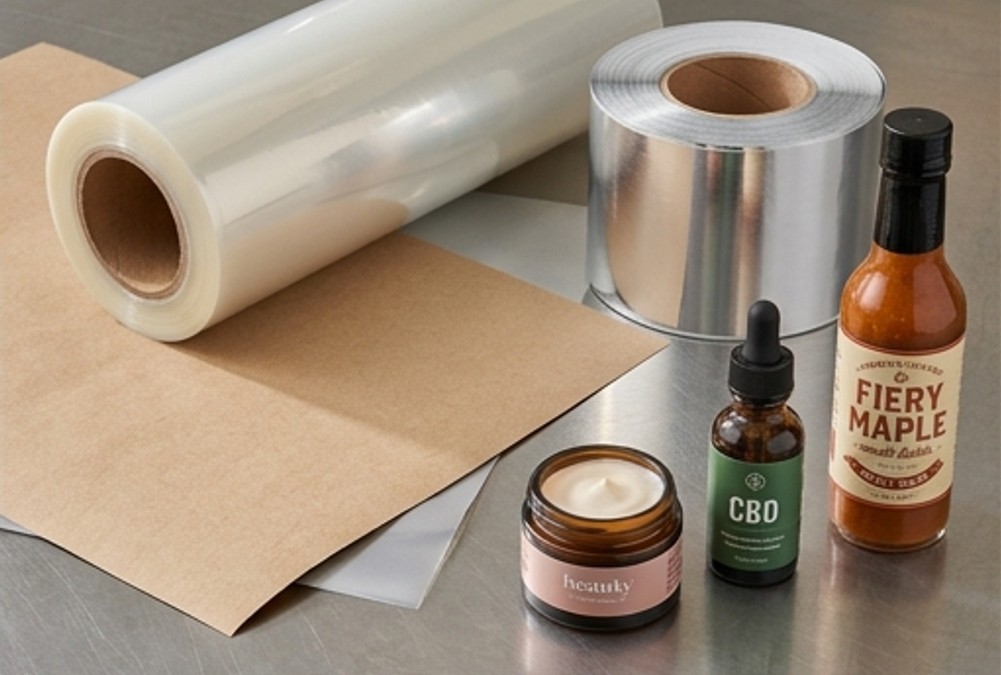 In retail, trust is built before anyone reads a single word on your label. The quality of your packaging signals the quality of what's inside — and that happens in seconds.
A professional, compliant label tells customers that your brand is serious. It says you follow standards, care about safety, and invest in your product. Branded food labels that look clean, durable, and accurate communicate credibility in a way that cheap or peeling labels never can.
On the flip side, a label that smells chemical, has blurry text, or peels off at the corner creates doubt — even if your actual product is excellent.
This is why private label food packaging and label printing for small business clients are increasingly moving toward food-safe, premium materials. The cost difference between a compliant label and a non-compliant one is often just a few cents per unit. But the brand perception gap between the two can be enormous.
Investing in FDA approved labels isn't just about passing an inspection. It's one of the simplest ways to build lasting customer loyalty.
Cost Breakdown: What to Expect When Pricing Food-Safe Labels
One of the first questions entrepreneurs ask is: how much more do food-safe labels cost? The answer depends on several factors — but the good news is that affordable food labels that meet compliance standards are more accessible than ever.
Factors That Affect Label Pricing
Several variables influence the per-label cost of custom food safe labels:
- Material: BOPP and PET films cost more than standard paper but last longer and perform better in challenging environments.
- Adhesive type: Specialty adhesives (freezer-grade, waterproof) are priced higher than standard permanent adhesives.
- Finish: Matte and gloss laminates are typically similar in price; metallic or specialty finishes cost more.
- Print complexity: More colors, fine details, and special effects (like holographic or metallic) increase print cost.
- Shape: Die cut food labels with custom shapes cost slightly more than standard shapes due to tooling.
How Order Quantity Affects Cost Per Label
Like most print products, label pricing scales significantly with volume. Bulk food safe labels and wholesale food grade labels dramatically reduce the cost per unit. What costs $0.15 per label at 500 units might drop to $0.03 per label at 10,000 units. Small batch food labels and low minimum food safe labels options are available for startups and growing brands who aren't ready to commit to large runs.
Balancing Quality and Budget
You don't have to choose between best labels for food products and affordable food labels — many printers offer both. The key is to order the right quantity for your current stage, choose materials that match your actual product requirements (not over-spec), and work with a printer who's transparent about what's included in compliance.
Cheap food safe labels exist, but the goal isn't to find the cheapest option. It's to find the most cost-effective solution that still meets your safety, durability, and brand quality standards.
Frequently Asked Questions
What is the difference between food-safe and FDA-compliant labels?
"Food-safe" describes the physical properties of a label — meaning the materials, adhesives, and inks are non-toxic and safe to use on or near consumable products. "FDA-compliant" refers to whether the label meets the specific regulatory standards set by the U.S. Food and Drug Administration for packaging materials and label content. A label can be food-safe (made from non-toxic materials) without being fully FDA-compliant (if it's missing required information like ingredient lists or allergen disclosures). For complete compliance, you need both.
Do all product labels need to be FDA compliant?
Not every label requires full FDA compliance, but most products sold commercially do need to meet some level of regulatory standard. Food and beverage labels, supplement labels FDA compliant formats, cosmetic labels, and vape labels all fall under different FDA guidelines. If you're selling in the United States, it's safest to assume your product label has some compliance requirements and verify which ones apply to your category.
Can I use any adhesive on food packaging?
No. Not all adhesives are safe for food packaging. Only a food grade adhesive or FDA approved adhesive that meets indirect food contact standards should be used. Standard adhesives contain solvents and chemicals that can migrate into food, especially in warm or moist conditions. Always ask your printer to confirm what adhesive is safe for food packaging before ordering.
Are waterproof labels automatically food-safe?
No. Waterproof food labels are resistant to moisture, but waterproof doesn't automatically mean the materials are food-safe. A waterproof label might use a film and adhesive that holds up well in wet conditions but still contains materials not approved for food contact. Always verify that waterproof labels are also made with food-safe adhesives and inks.
What label materials are approved for direct food contact?
Very few labels are approved for direct food contact. Most food packaging labels are for indirect contact only — meaning they go on the outside of the container. For direct food contact applications (like tags embedded in packaging), you'd need specialty materials specifically certified for that use. For most brands, indirect contact compliance is sufficient.
Do CBD and vape product labels have the same FDA requirements as food labels?
Not exactly. CBD product labels FDA guidelines are distinct from standard food labeling rules. The FDA regulates CBD products differently depending on whether they're classified as dietary supplements, cosmetics, or food additives. Vape label requirements also differ, with mandatory nicotine warnings and child safety information required. Both categories have strict rules that go beyond typical food labeling, so it's worth consulting the specific guidelines for your product type. See our CBD packaging labels and vape product labels pages for more information.
How do I know if my label printer uses food-safe inks?
Ask directly. A printer using food safe ink printing standards will be able to tell you which inks they use, whether they're UV-cured or water-based, and whether they've been tested for migration compliance. If your printer can't answer this question or doesn't have documentation, that's a red flag.
What's the minimum order quantity for food-safe custom labels?
It varies by printer, but many suppliers now offer low minimum food safe labels starting at 100–250 units. Small batch food labels are increasingly available as digital printing has made short runs more cost-effective. If you're a startup or testing a new product, look for a printer that offers small batch options without sacrificing material quality.
Can I get food-safe labels with a custom shape or die-cut?
Yes. Die cut food labels in custom shapes are fully compatible with food-safe materials. Whether you want a round jar label, a contoured bottle label, or a completely unique die-cut shape, the food-safe materials (BOPP, PET, paper) can all be cut to spec. For help choosing the right shape for your container, check out our label shapes guide.
How quickly can I get FDA-compliant labels printed and shipped?
Turnaround times vary by printer and order size, but fast-turnaround food labels are widely available. Many specialty label printers offer 2–5 business day production times for standard food-safe label orders. Rush order food labels with 1–2 day turnarounds are sometimes available for an additional fee. The key is to have your print-ready design file prepared before you place your order—delays almost always come from artwork issues, not production.


Popular Products
-

Honey Labels & Stickers
$0.59